
A Brief History of Autism
Brandon Fredricks August 1, 2023
The first person to be diagnosed with autism was Donald Gray Triplett . An Austrian psychiatrist named Leo Kanner first met with Triplett in 1938. After five years, Kanner referred to Triplett as Case 1. But was Kanner the first to describe autism? Has the definition changed since Kanner published his work? Was he the only one working with children that had autistic traits? Let’s explore the fascinating and turbulent timeline of Autism Spectrum Disorder (ASD).
The first description of autism.

In 1798 a French physician named Jean Itard described a wild boy named Victor. Victor could not speak, rocked when seated, and had a limited attention span. After Itard spent five years with Victor, the boy could speak, read, and write a couple words and phrases. With the list of Victor’s characteristics, modern psychologists suggest that he was autistic. The educational framework Itard had made became the foundation of special education for children with intellectual and developmental disabilities. Édouard Séguin and Maria Montessori’s approach to education would eventually use Itard’s research.
Eugen Bleuler is accepted as the first person to use the word autism. He coined the term in 1911 as a symptom of a disorder he discovered: schizophrenia. He defined the main symptoms of schizophrenia as the four A’s: associations, affect, ambivalence, and autism. He considered autism an infantile way of avoiding unsatisfying realities and replacing them with fantasies and hallucinations. He thought it was a symptom of the most severe cases of schizophrenia. Nobody challenged Bleuler’s perspective until the 1960s.
The Big Names: Leo Kanner and Hans Asperger
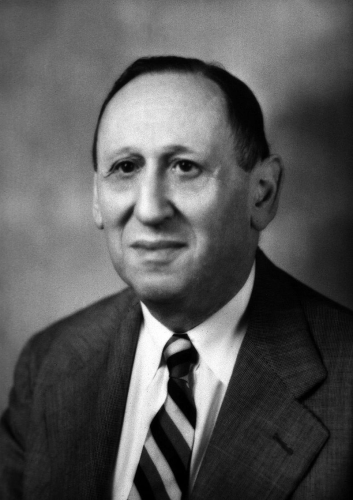
Photo by Johns Hopkins University
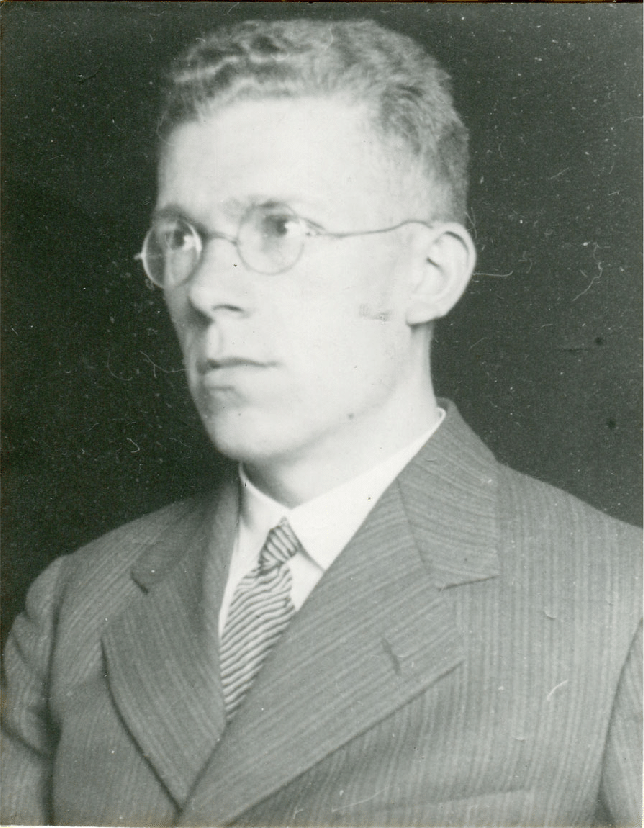
Author Unknown
In 1943, Leo Kanner became the first person to publish a systematic description of autism. He concluded it was a neurodevelopmental disorder, the cause of which the child’s parents were the blame. Kanner not only described the child’s behavior but that of their parents as well. It was not until 2013 that a large-scale study found limited evidence linking autism to genetic factors. Kanner’s observations of the parents are considered prescient of the study’s conclusions.
Kanner was not the only one during his time that studied autism. Hans Asperger also worked with children displaying traits associated with the disorder. His first study did not get published until 1944. However, five years before Kanner published his work, Asperger gave a lecture in 1938. During this lecture, he refers to the children he worked with as ‘autistic psychopaths.’
Asperger’s contributions did not receive international attention until the 1980s. The Diagnostic and Statistical Manual of Mental Disorders (DSM) did not include Asperger Syndrome until 1994, in its fourth edition. In the fifth edition of the DSM, Autism Spectrum Disorder unified Autism Disorder, Asperger’s Syndrome (AS), and Pervasive Developmental Disorder Not Otherwise Specified (PDD-NOS).
The removal of Asperger’s syndrome was not unforeseen. After the publication of the fourth edition of the DSM, controversy surrounded AS as a distinct diagnosis. High-functioning autism and AS were too similar. Professionals had a hard time distinguishing the disorders. Kanner’s research took place in the United States during World War II. He immigrated to the United States in 1924 after hyperinflation took hold in post-World War I Germany.
Asperger’s research took place in Nazi-controlled Vienna. Rumors spread that Asperger challenged the National Socialist Party. According to Herwig Czech, this was not the case. Recent works and examinations of Asperger’s work and political ties proved these rumors false. Asperger capitulated some personal political views in exchange for career opportunities and protection. He knowingly sent his patients to Am Spiegelgrund, a child euthanasia clinic in Germany. He referred to the children as ‘unbearable burdens‘ to their mothers.
Autism’s first entry into the DSM and its evolution.
The DSM’s first edition contained a single reference to autism. The book, published in 1952, referred to autism as a symptom of schizophrenia. It remained a description of schizophrenic behavior in the second edition of the DSM, published in 1968. The DSM III, 1980, listed Infantile Autistic Disorder as a stand-alone diagnosis.
Autism disorder did not appear until 1987, in a revision made to the DSM III. Since its first appearance, it has made drastic changes. In the DSM IV we see autistic disorder split into four categories: AS, PDDNOS, Rett’s Disorder, and Childhood Disintegrative Disorder.
We are now in the era of the DSM IV. In 2013, Autistic Disorder changed to Autism Spectrum Disorder without any subcategories. Worry set in about the precision of diagnostic boundaries. Would individuals previously diagnosed with a subcategory be refused service? Would individuals needing support be refused service because they could not meet the precise criteria of the new disorder? Instead of defining Autism Disorder further, a framework was created. ASD provides a bounded system with high internal flexibility. The severity level of ASD ranges from requiring support to requiring very substantial support.
Autism Acceptance

Throughout history, neurotypicals dominated autism research. They focused on the negative traits and what makes an autistic person different than their peers. A stigma surrounding the disorder started before society became aware of its existence. Now that the general public is aware of ASD, we must promote autism acceptance. Some organizations have stepped up to advocate for autistic people, while others still negatively perceive the disorder.
An example of a company viewing autistic people negatively is Autism Speaks. This organization views autistic people as having a disease that needs to be cured. They have released advertisements that demonize autism. Bob and Suzane Wright founded Autism Speaks after their grandson’s diagnosis. The company’s Board of Directors did not have an autistic person until recently. The board, consisting of 28 people, has added one autistic person since the organizations founding.
However, other organizations champion the acceptance of autistic people. One example is the Autism Self Advocacy Network (ASAN). This is an organization run by autistic people for autistic people. Their motto, “Nothing About Us Without Us,” refers to how autistic people should be involved whenever autism is discussed. ASAN is a proponent of the neurodiversity movement. This movement encourages people with brain-based disabilities to be accepted and included in society. ASAN doesn’t just help people with autism; they advocate for all individuals with disabilities.
In Conclusion
ASD has a complex history but a bright future. Modern research and advocacy have brought awareness to the needs of individuals on the autism spectrum. As we move toward inclusivity, autistic individuals live with more dignity, respect, and equal opportunities.
Where to Find Us
You can find us on Facebook and meetup. If you have any questions or concerns, click the email link below or send questions to wisconsinautism@gmail.com
Newsletter
Subscribe to our email to get updates.
 Wisconsin Autism Empowerment