Employment Panel Insights
By Sandy Krause
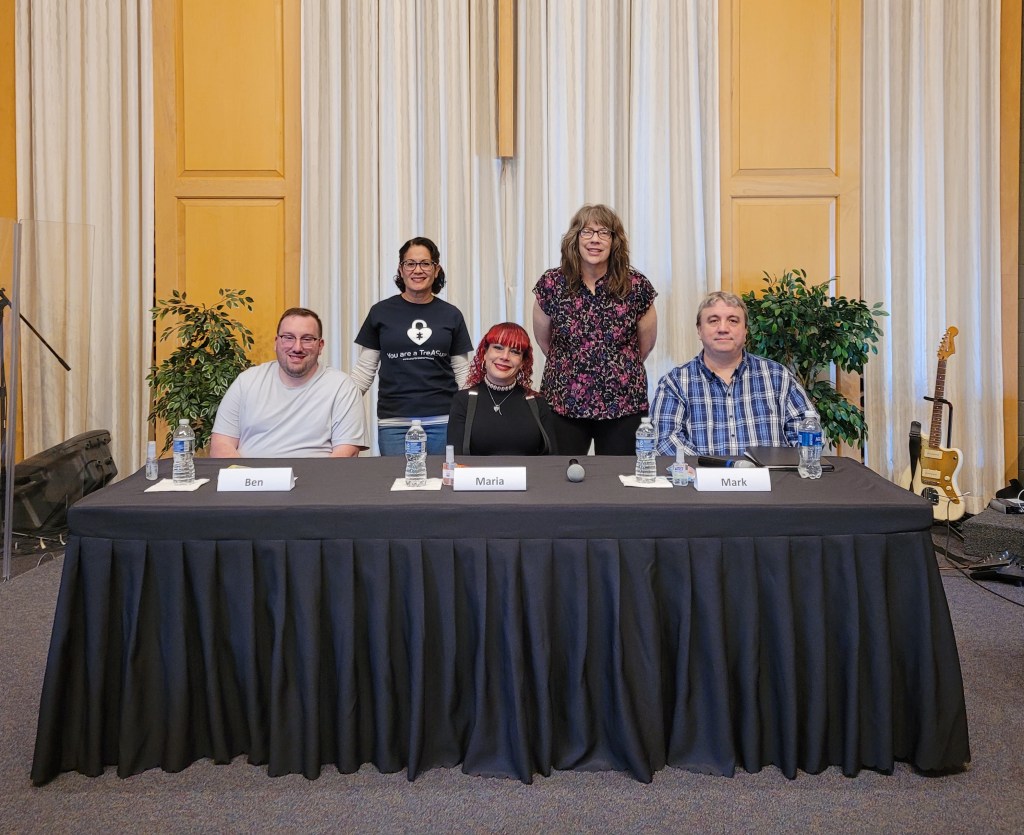
Thank you to the panelists on our employment panel on Saturday, May 10th. Benjamin King brought the perspective of an HR recruiter. Millie Rodriguez brought the college neurodivergent placement expertise to represent MATC. Mark Poffinbarger came from the Division of Vocational Rehabilitation with resources and guidance. It was a great sharing of knowledge.
The question of needing so much experience for entry-level positions was asked. Employers are asking for the most they can get. There are job requirements, like a degree, licensing or certification. However, there are also job-desired qualifications that they would like to have in the role, but they aren’t essential. For jobs with special skills/training, the experience required is often about safely doing the job. For many employers, seeing that you are trainable matters more than experience.
A hot topic: Should you disclose being neurodiverse on an application or in an interview? All of the panelists answered a strong NO! They reminded us that it is illegal for an interviewer to ask about disability status. The advice is to sell your abilities and be a fit for the job. Disclose only that of yourself that shows your best self. “It’s like a first date, the goal is to impress the other person,” shared Mark. Use the positives of your unique ND brain to link to the job you can do well because of who you are. “Interviewers are human, prone to biases. You don’t know what they know about autism. Many have completely wrong information,” said Benjamin. So do not disclose!
In today’s job market, the best way to find and apply for jobs is indeed.com, employer websites and the DWD website. Now everything is done electronically. “You need to fill out an online application to be considered for a position. Online interviews are common for first-round candidates,” said Millie. Review the company on Glassdoor.com to see what the company is like before applying.
When asked about the ‘imagine’ questions like ‘if you were a tree, what tree would you be’, the panelists all agreed it’s not about what you answer. There is no wrong answer. It’s about them seeing your thought process. Any quick answer with a positive focus is good. I’m a pine tree because I am green and alive all year, providing shelter. I am an oak, tall and strong. No negativity in this answer, positive.
The standard ‘tell me about yourself’ should be practiced ahead of time. It’s a common question asked. A short, concise, positive link to the job answer is best. Example, job with precise procedures… I like making crafts, taking materials and following the steps to create something new. Or a job that demands attention to detail… I like to hike on trails; there are always things to observe in nature.
A question that perplexes many literal thinkers is ‘why are you the best candidate for this job?’. You don’t know the other candidates. A good answer is ‘I don’t know the other applicants, but I… Review your qualifications and unique abilities that fit the job.
Negativity is a job killer. It’s a huge red flag for employers when interviewed. Hiring managers are human; they want to hire people they want to work with.
Benjamin said, “Know thyself, sell thyself.” We tend to forget about many of the good things we accomplish or special things about ourselves. Let others in your life remind you so that you can highlight these things in interviews.
Where to Find Us
You can find us on Facebook and meetup. If you have any questions or concerns, click the email link below or send questions to wisconsinautism@gmail.com
Newsletter
Subscribe to our email to get updates.
 Wisconsin Autism Empowerment